
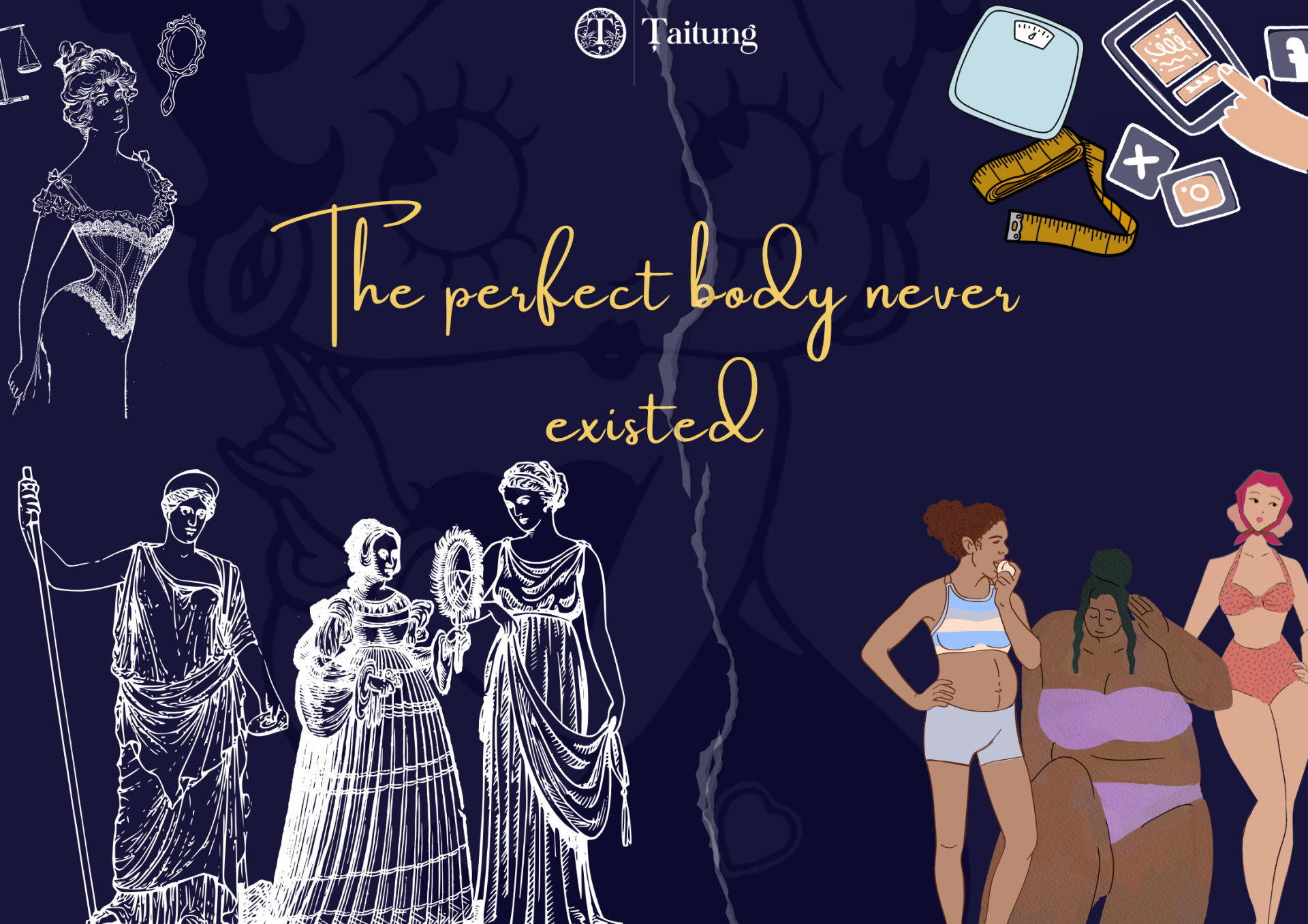
What if the perfect body you’re chasing never existed?
From its very origins, beauty carries within itself an ambivalence. The ideal body is a social construct that fluctuates significantly across time, culture and individual preferences rather than a single fixed standard, but those are not biological truths. Most of the time it derives from literature and theatrical plays written by men full of fantasies.
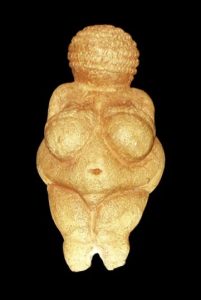
In prehistoric times, representations such as the Venus of Willendorf depicted women with full, rounded bodies. There is no flat stomach or narrow gaps between the limbs. According to mythology, feminine beauty later came under the guardianship of Aphrodite, harmonious and gentle, and Pandora, deceptive and fatal. Yet it must not be forgotten that Ancient Greece was a male dominated society, where misogyny views toward women were present from the very beginning of Athenian democracy.
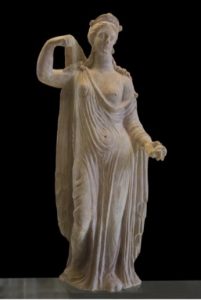
The medieval canon of the nymph disappears in favor of a fuller, slightly plump woman (it was a symbol of wealth), but the model of the blonde with a face whitened by ceruse (white lead used as a pigment) remains in the hearts of those enamored with beauty. By importing the Italian model to the court of France, Catherine de’ Medici became the initiator of Baroque beauty. Beauty can only be blonde and Venice women achieve a rarely matched sophistication in hair dyeing. Artificial beauty marks begin to appear, hiding freckles and pimples.
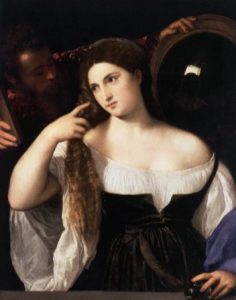
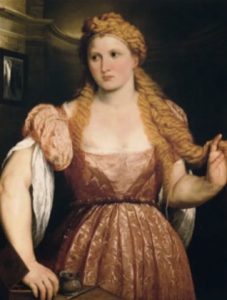
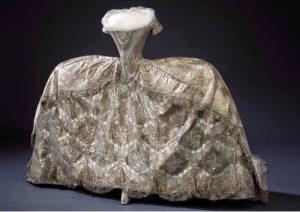
But then something begins to change, and that is the Waist-to-Hip Ratio. The narrow waist obsession began in the 1500s and gradually intensified. It’s easiest to observe when the woman is clothed because the hips and the shoulders are artificially enlarged, while the middle is narrowed. Even when the waist isn’t artificially narrowed, the mere fact that the hips are huge gives the illusion of a smaller waist. Not to mention the atrocious thing that happened to the poor women from having to wear all those gowns: the corsets distorted the waist, which lead to gut issues and various deadly infections. Some women even ate tapeworm eggs to lose weight (mostly in the 19th century). Because of the gown’s impracticality, women had to urinate in the dress. It’s important to take into consideration that perfumes were invented at that time for the sole purpose of covering the smell of wigs and bad hygiene.
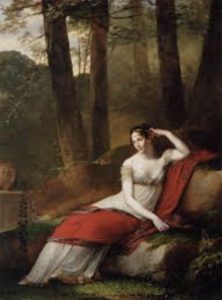
Then, around 1830, it became fashionable to appear gloomy and pale like someone on the verge of death. The face takes on yellowish tones. To lose weight, women drink nothing but vinegar, eat only lemons, and read late into the night to darken the circles under their eyes. It is the era of brunettes with eyes enlarged using belladonna or atropine (drugs). These Parisian affectations do not extend to bourgeois women, who do not recognize themselves in such corpse-like figures. Graceful and soft, with slightly sloping shoulders, she has plump hips, rounded arms, and short, full hands. “The bourgeois woman does not wear makeup; she simply arranges herself” (Paul Perret, La Parisienne).
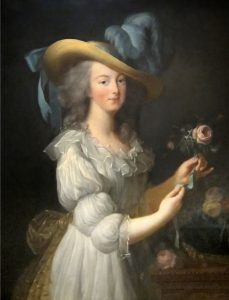
Female emancipation is equally one of the factors that contributed to shaping the body in the 20th century. The plump bourgeois woman, a victim of the unpleasant effects caused by not having to gain weight, and the corset, become outdated. Her place is taken by a figure who fights to obtain her civil and political rights, for control over motherhood, and who no longer tolerates male authority dictating the standards of beauty. Women are now slender, with flexible bodies and muscles trained on gym equipment. The fashion for short hair shatters the male fantasy of abundant locks. The abandonment of the corset (1909) frees the body, which from then on will be shaped only through gymnastics. The modern woman believes in an androgynous, boyish, and ambiguous body (as presented in the novel La Garçonne by Victor Margueritte).
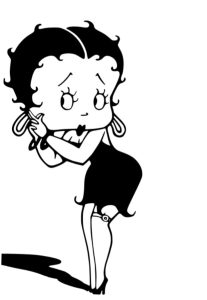
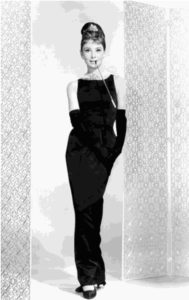
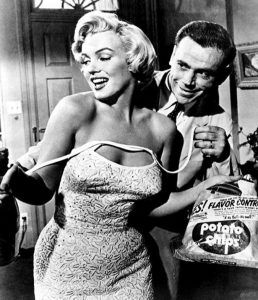
But every action has a reaction, and by the 1940s, the standard shifted in the opposite direction. The hourglass-like figure is popular again, only this time it’s not so obviously artificial, because women were not wearing a hoop skirt. Betty Boop (female cartoon character) is the standard; she’s full breasted, has a small waist and nice round hips. Marilyn Monroe represented exactly that in the 1950s; however, Audrey Hepburn was also at the height of her fame, bringing back the 1920s-style androgynous look that many women had previously struggled to achieve, even with artificial help. Later on, “heroin chic” became the trend in modeling. Heroin infiltrated pop culture through attention brought to addicts in the early 1990s.
However, a big event had taken place all this time. Feminists, along with the broader culture of time, began to champion comfort and freedom of movement. Women abandoned the corset and the binding of breasts. From now on, beauty was expected to be achieved without artificial support. Women were now meant to look flawless in increasingly minimal swimsuits, which left no room for undergarments to conceal or reshape the body. It was no longer enough to look a certain shape. You had to actually be a certain shape. The corset was replaced by an invisible psychological corset (Bruna, 238). Ever since, thinness has remained a lasting beauty standard, and millions of women spend a great deal of money, time and health trying to achieve it.
In this time and age, it is hard not to compare yourself to the person behind the screen, but everyone knows that it is not healthy. The standard is higher than ever: we are constantly confronted with images of bodies perfected through camera angles, lighting, AI, Photoshop, and other digital enhancements. Everyone measures themselves against this untouchable ideal, pushing to the point of breaking, but we forget that appearances do not equal health. Just because someone looks good doesn’t mean they are healthy. What if, instead, the world revolved around a standard of well-being, rather than an ideal of nonexistent beauty?
We must take into consideration that no two bodies are identical. There are 8.3 billion people on this earth, 4.05 billion of whom are female. Considering the global population alongside the vast diversity of cultures, races, and climates, the odds of meeting someone that has the exact same physical situation and needs as you are incredibly low. Humans were not put into this world to be copies of each other, but rather themselves.
Sources:
Frumusețea o istorie a eternului, Dominique Paquet (Main source)
https://pmc.ncbi.nlm.nih.gov/articles/PMC8543033/
https://www.psychologytoday.com/us/blog/eating-disorder-recovery/202504/the-myth-of-the-ideal-body
https://en.wikipedia.org/wiki/Heroin_chic
https://herhalfofhistory.com/2024/07/25/13-1-the-ideal-body-shape-historically-speaking/
https://data.worldbank.org/indicator/SP.POP.TOTL.FE.IN
https://www.healthline.com/health/diet-and-weight-loss/tapeworm-diet
Autor

