
In the past few weeks I started to notice that most of my friends and I tend to express our emotions predominantly in a foreign language- usually English- rather than our mother tongue. This had me wondering if it’s something common among bilingual and polyglot people, and made me realize that I hadn’t observed the subtle shift in how we share our feelings before.
That is why I wanted to research the reason behind why we have the tendency to switch between languages when speaking, especially when expressing how we feel, and whether it has any effect on the brain.

The first question I wanted to answer was why we switch between languages when expressing emotions in the first place.
The short answer: we feel less attached to those feelings. Studies suggest that the main reason behind this shift when exteriorizing thoughts is simply the fact that we experience less emotional connection to the memories linked to the feelings we want to explain. Consequently, it makes it easier for us to open up and be understood by others listening to what we have to say.
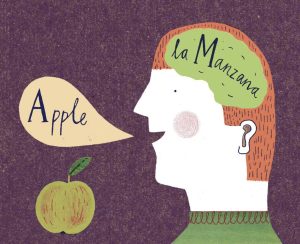
Another reason would be the intimacy and vulnerability tied to our native language. When speaking a foreign language, our brain engages more in conscious, analytical processing, retaining vocabulary and grammar structure- here’s where the left brain hemisphere comes into play. Of course, other brain parts help us make the switch between languages, but the left brain hemisphere is usually the one that does the work. Moreover, the left brain hemisphere is also the one associated with logic, and critical thinking. As a result, we become more strategic and less emotionally reactive. We focus less on the sentimental weight of venting and more on telling the story clearly to be understood.

Another aspect I wanted to investigate was how a bilingual brain functions. One particularly important aspect is its structure compared to that of a monolingual brain. Structural MRI scans show that people who speak multiple languages develop higher gray matter density in the left inferior parietal cortex. The degree of this structural change is generally increased by the number of languages one knows.
The same applies to white matter. White matter tracts, bundles of myelinated axons that act as the brain’s communication cables, allow different regions to signal each other rapidly. Lifelong multilingualism helps maintain the integrity of these pathways into old age and supports neuroplasticity. Two other key aspects to consider are that all of a polyglot’s languages remain active simultaneously and that the adult brain retains enough plasticity to learn additional languages at any age.
While knowing multiple languages may sound exciting, it also comes with a few challenges, one being the anxiety of maintenance. For example, forgetting a word in German or French might cause you to panic and wonder whether you are losing your language skills. Then there’s also the pressure to perform. People would usually ask a polyglot to translate something on the spot, or say something in a foreign language, and although this may be fun at first, over time it can become draining and frustrating.
Ultimately, being bilingual or a polyglot is a fascinating skill that requires time, dedication and continuous practice. Not only can it support brain health, but it can also offer a unique way of expressing our feelings, despite the challenges that come with maintaining multiple languages.
Autor

