
There are trips where you take pictures. And there are trips where you come home a little different.
Our school’s participation in the international project in Wageningen, the Netherlands, was exactly the kind of experience that starts with “how cool will it be!” and ends with “ok, I’m really going to miss these people”.
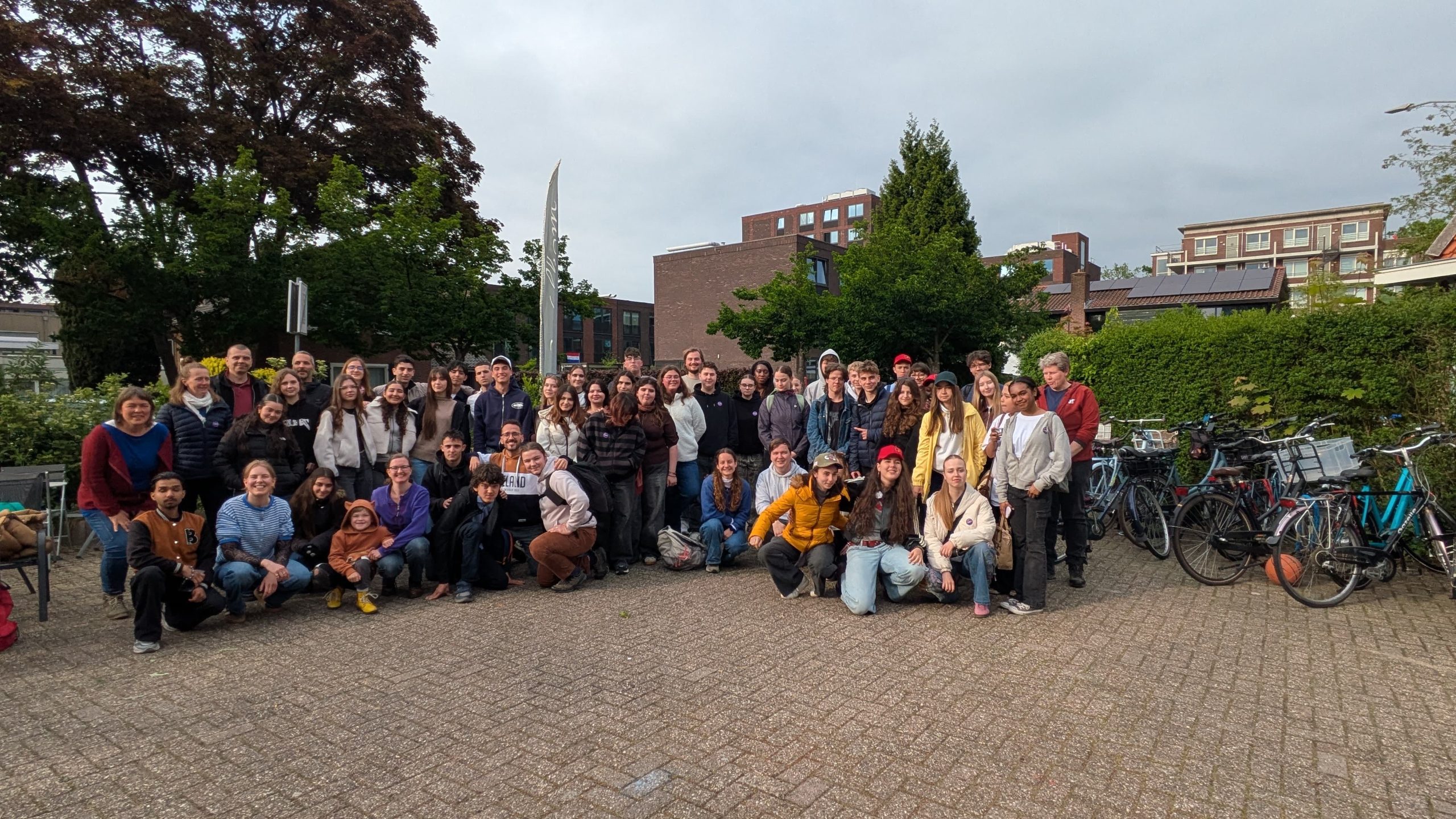
For a few days, students from Romania, Spain, Germany, Hungary, the Netherlands, India, the Philippines, Ukraine, Northern Ireland, Benin and Indonesia got to know each other and built real-life connections that will last us a lifetime. But beyond the social side, the project focuses on some very serious themes: historical memory, European identity and the importance of peace in a world that is still learning from the mistakes of the past.
After a long journey of catching planes and trains, we arrived at this small town in Netherland’s center called Wageningen. Although we were tired, we were also eager to get to know our soon-to-be exchange families with whom we’d spend invaluable time together and are so grateful that they welcomed us into their houses with open arms.
What was our first challenge?
Bicycles.
In the Netherlands, the bicycle is not a means of transportation, it’s a way of life. We explored Wageningen together, played games to get to know each other like pairing up on our common interests or debating world problems in a fun manner. Each country came up with their own icebreakers, even though ours was definitely better. (I may or may not be biased)
At the same time, the activities helped us develop intercultural communication skills, teamwork, and adaptation to new environments — exactly the kind of skills that everyone says “will matter in the future.”
Probably the most meaningful workshop of the exchange was the debate about queer relationships, Pride Month and how different countries view the LGBTQ+ community. The scenario was simple: a group of teenagers want the pride flag to be put in classrooms furing Pride Month. Their school administration however refuses to on the grounds that schools cannot be politically or religiously affiliated. What do you do from then on?
It was refreshing to see that countries like Spain or Germany are unprejudiced and open when talking on topics that feel taboo for us.
One of the most moving moments was the opening ceremony, where each country presented its city, culture, and school through a short video. It wasn’t just a presentation. It was a reminder that even though we come from different places, we have the same pride when we want to represent something important to us.
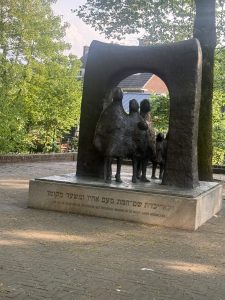
After checking out the whole town in a few days, seeing its main attractions like the big church and smallest pyramid of Wageningen, the activities dedicated to World War II and the commemoration of the victims of the war came around.
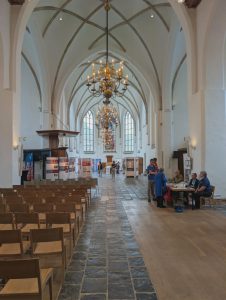
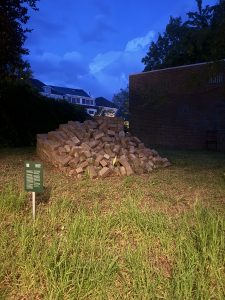
The visit to Grebbeberg and the stories about the history of the place completely changed the atmosphere. For a few hours, history was no longer just a subject in school. It became something personal. I understood more clearly how historical events still influence European society today and why collective memory is important for our generations.
Perhaps the most powerful moment was the commemorative march and the two minutes of silence. Two minutes seem very short… until you are in the middle of a silent crowd, and It was one of those experiences that makes you understand that each person has their every person is living a life as vivid, complex, and central to them as yours and each od them think about freedom in their own way; the concept of sonder.
And, because any international group also needs chaotic moments to function, we also had our own talent show, and an evening of cooking and games. We danced, sang, and brought our own traditions to the Netherlands. Even these activities helped us collaborate better and discover how similar we can be, even if we come from different cultures.
Among the most special experiences was meeting war veterans.
For context, Wageningen is deeply important to the national Liberation Day, because it is the exact site where the capitulation of Nazi forces in the Netherlands was signed on May 5, 1945.
In a world where everything moves fast and attention spans last as long as a 15-second reel, listening to people who lived real history was something that cannot be fully understood in pictures or posts. Talking to them transformed the lessons about war, peace and civic responsibility into something real and deeply human for us.
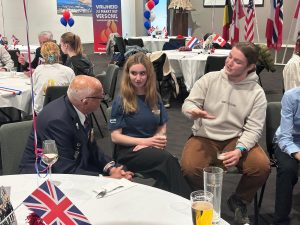
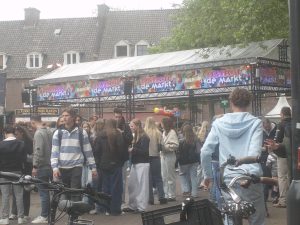
And lastly came the Wageningen festival of Freedom, a day in which the whole city center is controlled by music and fun.
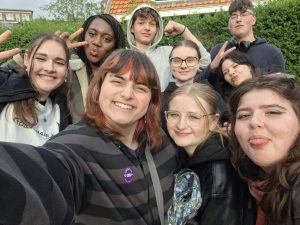
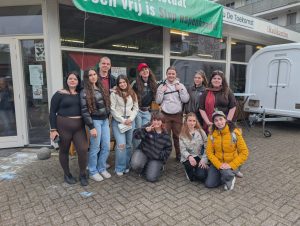
I left Wageningen with many memories, hundreds of photos and many hours of lost sleep. But rather with something more important: my European identity, the feeling that Europe is not just a chapter in a textbook or a flag on a building. It is made up of people, conversations, differences and friendships built over a few intense days.
Autor
